We are entering a new era. Not long ago, the possibility
manually altering life through manipulation of genes was deemed nothing more
than a myth. In an era in which mice have been cloned from a single drop of
blood (Briggs), we face certain ethical dilemmas. One issue involves the
question of “Big Bio” versus “DIY Bio”. On one hand, large, regulated,
well-financed, government-approved biotech projects might be safer and
ethically sound, however, a Silicon Valley model for biotech research might
lead to faster advancements in research and more medicinally-beneficial
experimentation driven by personal interest and private funding (Yunes).
Private funding, however, has its own caveats. A Silicon Valley model could
lead to extremely unregulated and possibly grotesque research. This also
inevitably leads to the question of the ethicality of genetic improvement or
manipulation for artistic means.
 |
| http://rt.com/files/opinionpost/21/58/c0/00/000_par7319356.jpg |
Like any frontier science or new technology, often it is the
projects that provoke the questions of ethics and future regulations of the new
practice. Artist Stelios Arcadiou has begun asking some of these questions,
unintentionally perhaps, by having a third ear implanted upon his arm (Vesna).
Life has become a medium of art in the case of Alba, a rabbit that is
fluorescent in the presence of black light due to the splicing of jellyfish genes
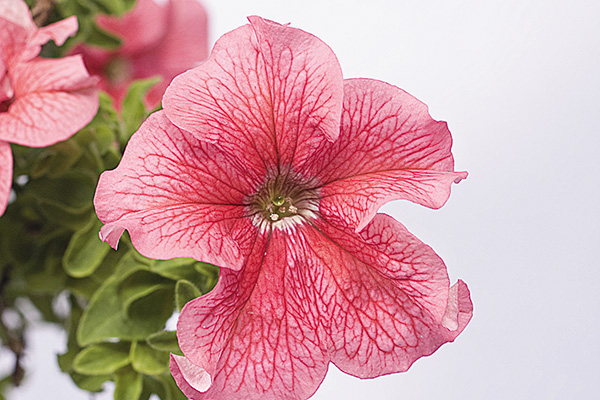
into its DNA. Another example are the flowers that are bred by George Gessert,
which are selectively hybridized over and over to create new, aesthetically
appealing forms.
 |
| http://blogs.smithsonianmag.com/artscience/files/2013/02/Designer-Genes-petunia-600.jpg |
Things start to get really sticky when we delve into human
experimentation and replication. Michael Bays’ film The Island explores the question of using genes to synthesize
organs in surrogate humans (The Island).
Although the movie is dramatized and action-oriented, this work of art poses
some questions that are still being discussed today. Should biotech research only be used to fix
“problems” or can it also be used to improve forms of life? At what ethical
boundaries should exist to keep us from destroying autonomous forms of life
even if they are created in a lab environment?
 |
| http://memberfiles.freewebs.com/72/27/101372772/photos/undefined/NeXt_Img_The.Island_15.jpg |
In order to address these questions, we must form a working
definition of what life means, something that is still being debated today. Slime
mold, for example, acts as one organism, however it is made up of genetically
unique entities that posses their own “autopoesis” (Levy). Is it ethically
acceptable to experiment on the colony of slime mold? If not, is it allowable
to experiment on fragments of it even if they have their own unique metabolism?
Do these questions apply to humans and our cells?
References
5 Bioart Pt1
1280x720. Victoria Vesna. UC Online Program, 2013. Film.
Briggs, Helen.
"Mouse Cloned from Drop of Blood." BBC News 27 June 2013. BBC News.
Web.
The Island.
DreamWorks Home Entertainment, 2005. Film.
Levy, Ellen.
"Defining Life: Artists Challenge Conventional Classifications."
(2012). Print.
Yunes, Nour Diab.
"Meanings of Participation: Outlaw Biology?" NourDiabYunes.
Wordpress, 8 Feb. 2010. Web. 10 May 2015.

No comments:
Post a Comment